What an annual HVAC check up should cover
A real check up leaves you with readings and plain answers, not a sales pitch.
October 21, 2026 · 4 min read
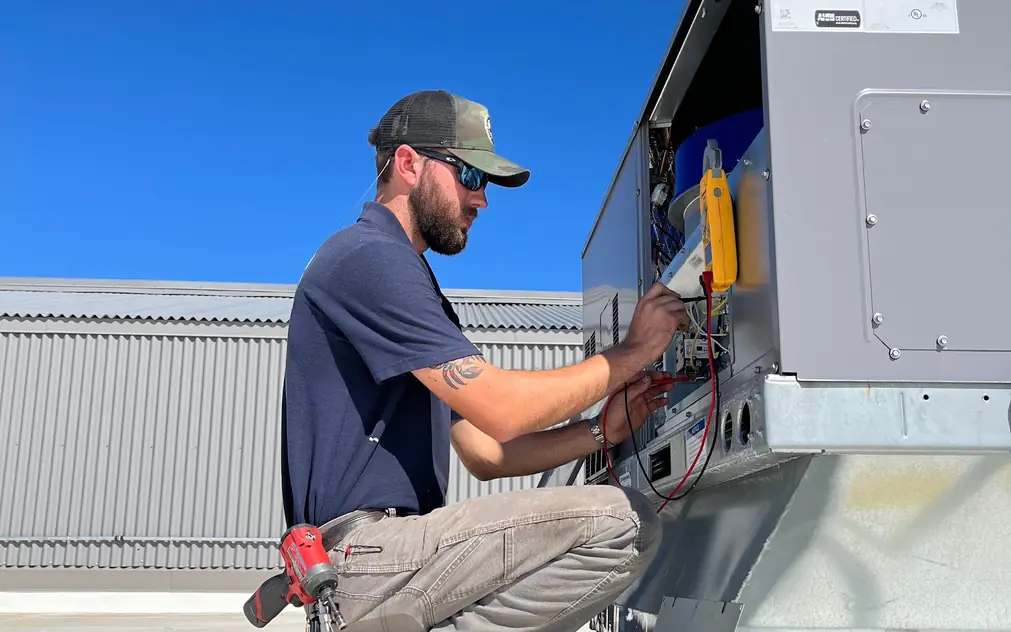
Everyone has heard that heating and cooling equipment should be looked at once a year. Fewer people can say what the visit is supposed to include, and that gap is where bad experiences happen. If you do not know what a check up looks like, you cannot tell a thorough one from a quick glance, or a service call from a sales call. Here is what a good visit covers, split by season, and a few ways to tell what kind of visit you are getting.
Why two visits, not one
In Texas the air conditioner works much harder and much longer than the furnace, which is why many homeowners schedule a check up in spring before the heat arrives. The furnace sits unused for most of the year and then has to start reliably on the first cold morning, which is why a fall visit makes sense for the heating side. Some people combine both into one visit. Whichever way you go, each half of the system should get its own attention, because the parts that wear out are different.
What the cooling side should include
A cooling check up starts with the basics. The technician should look at the filter, inspect and, where needed, clean the indoor coil and the outdoor coil, and check that the condensate drain is flowing freely. A clogged drain is one of the most common causes of water damage, and it takes a few minutes to check.
Then comes the electrical side. Capacitors and contactors are the parts that most often fail on an air conditioner, and a meter can show when one is weakening before it leaves you without cooling. Wiring connections should be inspected and tightened where they have loosened. The blower motor and the outdoor fan motor should be checked for normal amp draw and smooth operation.
Finally the technician should check how the system is actually performing: the temperature drop across the indoor coil, the refrigerant pressures and the airflow. These are the readings that tell you whether the system is healthy rather than just running. Low pressures mean a leak that needs to be found. A poor temperature split can mean an airflow problem or a dirty coil. You should be able to ask what the numbers were and get an answer.
What the heating side should include
A furnace check up covers a different set of parts. The igniter and flame sensor should be inspected, since those are the usual causes of a no-heat call, and the flame sensor often needs cleaning. The burners, the vent and the inducer should be checked, along with the safety switches, including the limit switch. The technician should look at the heat exchanger as well as the accessible areas allow. A cracked heat exchanger is a safety issue, not a comfort issue, and it is one reason the heating side deserves a real look rather than a glance.
The technician should also confirm that the thermostat calls for heat and that the furnace goes through its full startup sequence and keeps running. For furnaces in attics, that includes looking at the drain pan and condensate line, since a leak in the attic reaches the ceiling quickly.
How to tell a check up from a sales visit
The difference is easy to feel once you know what to watch for. A check up produces information. A sales visit produces a pitch. In a real check up, the technician tells you what was inspected, what the readings were, what is fine, what is worn and might fail soon, and what needs attention now. You come away understanding the condition of your system in plain language.
- You are told what was checked and what the readings were.
- Problems are separated into urgent, worth watching and fine.
- You are shown the worn part rather than just told about it.
- Nobody asks you to decide on a major purchase during the visit.
- You can say no to a recommendation and the visit continues normally.
A homeowner named Bailey Curtis described exactly that experience in a Google review of ASR Mechanical's annual summer check up: "There were no hard sales pitches, just honest feedback and suggestions for annual maintenance." The standard is worth holding any company to. Honest suggestions are part of the job. Pressure is not.
Questions to ask when you book
You do not have to wait until the technician is in your driveway. When you call, ask what the visit includes, roughly how long it takes, and whether you will get a summary of what was found. Ask who to call if something comes up later. A contractor that is comfortable with a real check up will answer those questions without hesitation.
It also helps to mention anything you have noticed since last season, such as a strange noise, a room that runs warm, a smell when the system starts, or a spike in your electric bill. Small symptoms are often the first sign of a part wearing out, and an annual visit is the best time to bring them up. If you would like to schedule one, ASR Mechanical in Tomball can be reached at (281) 351-5354.
ASR Mechanical, (281) 351-5354
Call (281) 351-5354More articles
Told you need a new AC? What to check before you replace it
A big replacement quote is not always the end of the story, and a few plain questions will show you whether it should be.
Why your AC freezes up in a Texas summer
Ice on an air conditioner in July feels backward, but it has a short list of causes and a safe first response.