Told you need a new AC? What to check before you replace it
A big replacement quote is not always the end of the story, and a few plain questions will show you whether it should be.
October 21, 2026 · 4 min read
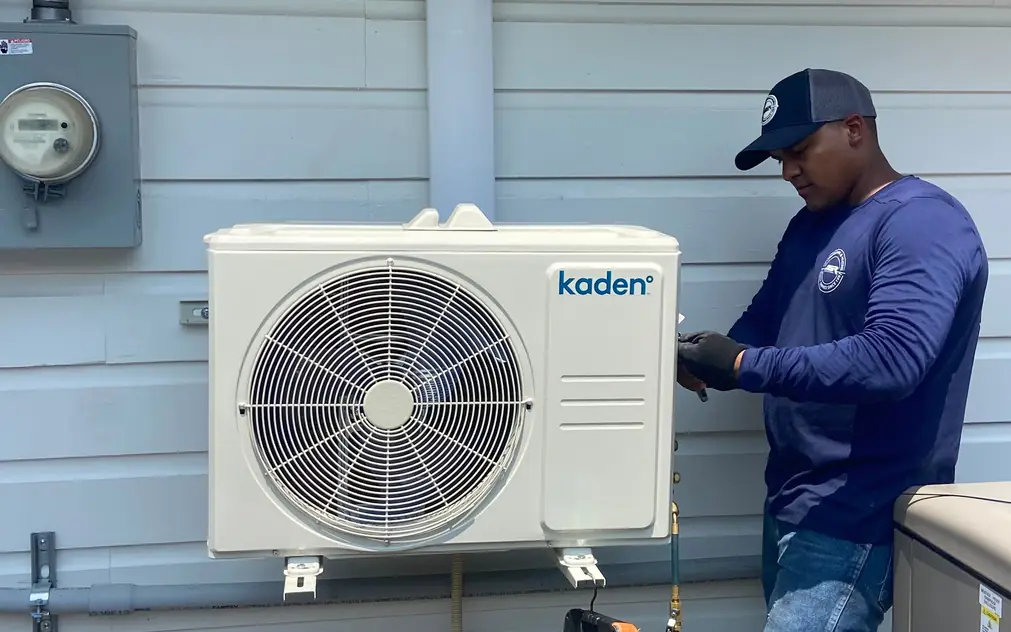
A quote for a full system replacement lands on the kitchen table, and the number is big enough that you start wondering whether anyone checked much of anything. Sometimes the answer really is a new system. Plenty of other times it is one failed part that costs a small fraction of that. The trick is knowing what to ask so you can tell the difference. This is general guidance for homeowners in Tomball and northwest Houston, and it applies no matter who you call.
Ask what exactly failed
A technician who recommends replacement should be able to name the specific failure. "The unit is old" is an age, not a diagnosis. Ask what the system is doing, what the technician measured, and which part or condition led to the recommendation. Good answers sound like observations and readings: the compressor will not start, the coil has a leak, the system is low on refrigerant and the leak cannot be found. Vague answers sound like generalities. You are allowed to ask the technician to show you the part, the gauge reading, or a photo of what they found.
It also helps to say what you saw before the system quit. Did the outdoor fan stop while the unit hummed? Did the air blow warm but not hot? Did ice show up on the lines? Those details narrow the list quickly, and a technician who listens to them is usually one who is diagnosing rather than guessing.
Cheap failures that look like a dead system
Several inexpensive problems can make an air conditioner look finished. A weak capacitor is the classic example. The capacitor gives the compressor and the fan motors the electrical push they need to start and keep running. When it fades, the outdoor unit may hum without spinning, or run for a while and then quit. It is a small part, and it is one of the most common failures in a Texas summer, when systems run for months with very little rest.
A worn contactor is another. It is the switch that sends power to the outdoor unit, and its contacts pit and burn over time. A bad contactor can leave the condenser dead or chattering even though the compressor itself is perfectly healthy. A technician can test both parts in a few minutes with a meter, and neither one is a reason to replace a whole system.
Then there are airflow problems. A clogged filter, a dirty evaporator coil or a blower running slowly can leave the house warm while the outdoor unit works hard for no result. Cleaning and adjusting may bring performance right back. In a Google review, T G described being told by another company that an entirely new unit was needed, and wrote, "I wanted a second opinion and reached out ASR." That is the move this article is recommending: when the news is expensive, get another set of trained eyes on it before you commit.
Refrigerant leaks and frozen coils are different questions
Low refrigerant is not a consumable that gets topped off like engine oil. An air conditioning system is a sealed circuit, so low charge means there is a leak somewhere. The real question is where. A leak at an accessible fitting or service valve is one situation. A leak inside the indoor evaporator coil is another, and the choice between a new coil and a new system depends on the age of the equipment, what else is wearing out, and what it takes to repair. Ask whether a leak search was done and what it found. "It needs refrigerant" with no mention of a leak is only half of a diagnosis.
A frozen coil is a symptom, not a cause. Ice on the indoor coil usually points back to airflow or charge, and a technician should tell you which one it was rather than just thawing it and leaving. If the same system freezes again a week later, the real cause was never found.
Questions worth asking before you sign anything
- What specific part or condition failed, and can you show me?
- Is there a repair option, and what do you expect from the system if I choose it?
- How old is the equipment, and are the indoor and outdoor units a matched pair?
- If refrigerant is low, was the leak located, and where is it?
- Can I have your findings in writing so I can get another opinion?
A contractor who is confident in a diagnosis does not mind that last question. If someone gets defensive about a second opinion, that tells you something too.
When replacement is the honest answer
Sometimes it is. A system with a failed compressor and a leaking coil is a different case from a system with one worn capacitor. Very old equipment that has needed several repairs in a short stretch may be better retired than patched again. Comfort problems that have nagged you for years, like rooms that never cool, may point to a design issue that a repair will not fix. None of that is a reason to rush. The decision should come from findings you understand, laid out in plain language, with the repair option on the table next to the replacement option.
If you have been told you need a new system and want a second look, ASR Mechanical is a family owned HVAC contractor in Tomball, founded in 1997. You can reach the shop at (281) 351-5354.
ASR Mechanical, (281) 351-5354
Call (281) 351-5354More articles
Why your AC freezes up in a Texas summer
Ice on an air conditioner in July feels backward, but it has a short list of causes and a safe first response.
Attic furnaces in Tomball homes: what fails and what to listen for
A furnace in the attic fails in familiar ways, and most of them announce themselves with a sound or a pattern.