Humidity, dust and the air inside a Gulf Coast house
If your house feels damp and dusty even with the AC running, the cause is usually in the equipment and the ducts.
October 21, 2026 · 4 min read
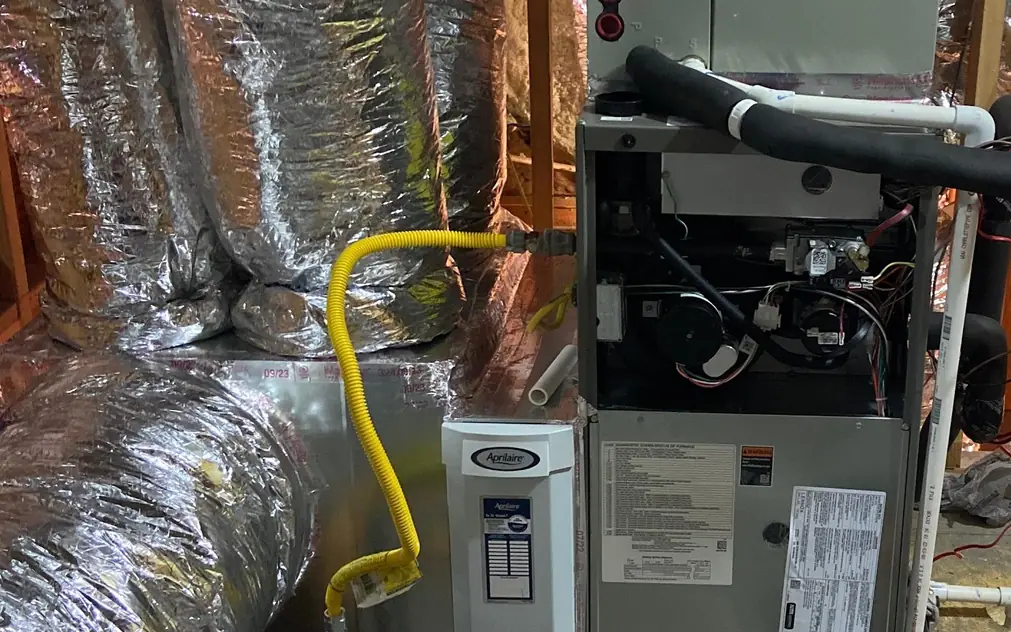
Living on the Gulf Coast means dealing with moisture for most of the year. Plenty of Tomball homeowners keep their thermostat at 75 and still feel the air is clammy, or dust the furniture on Saturday and find a film on it by Wednesday. Those are two different complaints with a surprising amount of overlap, because humidity and dust both depend on how air moves through the house and through the ducts. This article covers the main causes and the equipment that helps.
Your air conditioner is also a dehumidifier
An air conditioner removes moisture as a side effect of cooling. Warm, humid air crosses the cold indoor coil, and water condenses out of it and drains away. The system dehumidifies best when it runs in long, steady cycles. A system that cools the house quickly and shuts off, a pattern called short cycling, can leave the air cool but damp because it never ran long enough to pull much moisture out.
That is one reason oversized equipment can feel worse than right-sized equipment. It is also why lowering the thermostat to chase a damp feeling often does not work. You end up with a colder house that is still sticky. If the air feels clammy at a reasonable temperature, the humidity itself is the thing to address.
Some signs are physical: a clammy feeling on bare skin, a musty smell in a closet, condensation on windows or on ducts and vents, or damp-feeling towels and bedding. You can also check directly. A small hygrometer from a hardware store costs little and shows indoor relative humidity at a glance. Many contractors aim for the 40s to low 50s as a comfortable range, and readings well above that for long stretches are worth mentioning to a technician.
What a whole-house dehumidifier does
A whole-house dehumidifier ties into the duct system and pulls moisture out of the air independently of the cooling cycle. It makes sense when the air conditioner keeps up with temperature but not with humidity, especially in mild weather or at night, when the system runs less. Unlike a portable unit in a single room, it treats the whole house and drains on its own. It is not the right answer for every home, and a technician should look at the existing equipment, the ductwork and the airflow before recommending one, because sometimes the fix is simpler.
Dust, filters and media air cleaners
The filter in a standard return grille or slot does the basic job of protecting the equipment. A media air cleaner is a larger, deeper filter cabinet installed in the duct system near the air handler. Aprilaire is one well-known brand, and the photo at the top of this page shows an Aprilaire media cabinet installed beside an attic furnace and air handler. Because the media is deep and has far more surface area than a thin filter, air passes through with less restriction, and it traps more of the fine dust that would otherwise settle on your furniture or build up in the system.
These cabinets still need maintenance. The media has to be replaced on the manufacturer's schedule, and a media cabinet that is overdue loads up and restricts airflow just like any clogged filter. A technician can tell you what size and type your ductwork can handle, since not every system suits every cabinet.
Duct leakage in the attic
Dust that keeps coming back often has a source the filter never sees: leaks in the ductwork. In most local houses the ducts run through the attic, where the air is hot, humid and full of insulation fibers and dust. If the return side of the duct system has gaps, loose connections or a disconnected section of flex duct, the system pulls attic air in and sends it through the house. That air is hotter and wetter than the air you meant to cool, which loads the system with extra humidity as well as dust.
Leaks on the supply side are a different problem. Cooled air escapes into the attic before it reaches the room, so some rooms never get comfortable even though the equipment runs for hours. Warning signs include one bedroom that is always warm, dark streaks on insulation near duct joints, dust collecting around return grilles and ducts that sweat in summer. A technician can inspect the visible ducts and seal gaps and reconnect loose sections. Duct leakage testing exists for a more exact measurement, and it is worth asking about if comfort problems keep coming back.
If you are choosing where to start, work from the cheapest and most basic step toward the most involved. Replace the filter on schedule. Check the humidity with an inexpensive meter. Have the ducts and the drain looked at during your annual visit. Then, if humidity or dust is still a problem, ask about a media air cleaner or a whole-house dehumidifier, and ask the technician to explain why that product fits your house. If you want someone to take a look at what is going on in yours, ASR Mechanical in Tomball can be reached at (281) 351-5354.
ASR Mechanical, (281) 351-5354
Call (281) 351-5354More articles
Told you need a new AC? What to check before you replace it
A big replacement quote is not always the end of the story, and a few plain questions will show you whether it should be.
Why your AC freezes up in a Texas summer
Ice on an air conditioner in July feels backward, but it has a short list of causes and a safe first response.